
Farm-to-table food in Palawan
Time and care goes into creating menus at Tao

In Ann’s kitchen time is measured not in minutes but in seasons. And her life – like her cooking – has been shaped by what grows, what’s lost and what returns again.
Words by Angelo Comsti
An inspirational environment
"Not a day goes by that I don't wake up and feel grateful," says Ann Pansinsoy as she looks out over a lemony pink dawn sky, reflected in glossy glass-like water. "The sky here is forever changing. It's a reminder to keep on moving." Her walk to work is just a few glorious steps to the Kantina – the main kitchen on Tao Dipnay Farm – where the sun's rays pierce through the thatched roof and a well-oiled team stokes a fire, kneads dough, busts out tunes. At 6am it's already thrumming with activity.
“Everything at home revolved around food, from helping to dry fish and selling my mum’s homemade rice cakes to harvesting cashews with my grandmother,” says Ann. She grew up in Bucana, by chance just a stone’s throw from Tao’s bucolic headquarters, near El Nido.
“It was a hardworking but idyllic childhood,” she says. Her parents employed a fleet of fishermen and fields of glittering fish would dry in the sun around them.
The heart of the home
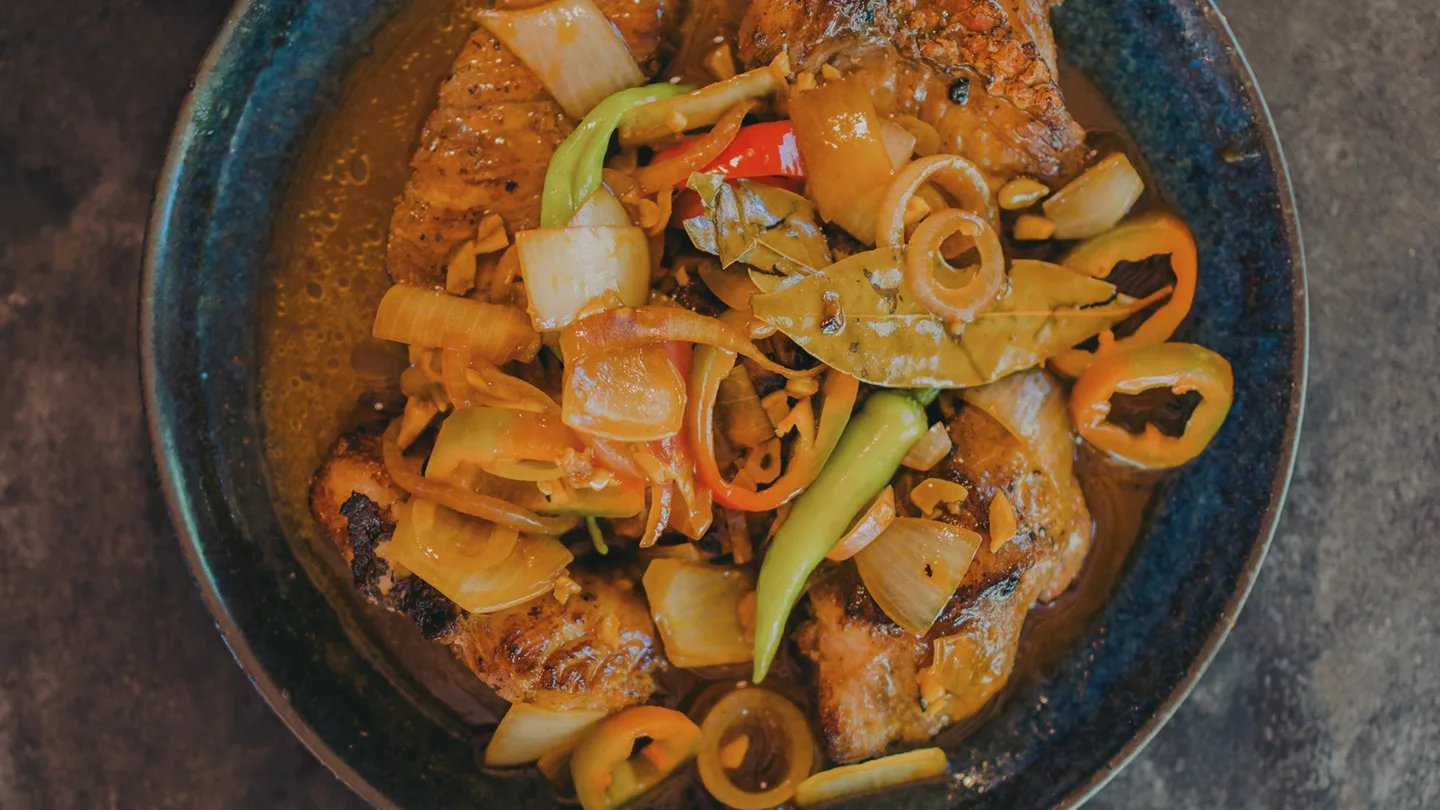
"Fish were so abundant then you could almost catch them with your hands. My dad was the cook and fed all the fishermen so there was always a simmering caldero (cooking pot) in the kitchen. We had a long table and it was always surrounded by people eating. Just thinking about my father's adobo brings tears to my eyes."
The dish was made with wild pigs, a lot of garlic, homemade coconut vinegar and laurel leaves, all simmering in the kitchen for hours. “He always bought whole peppercorns as he enjoyed crushing them himself.”
He set such a good example for Ann that she now turns to those memories – and flavours – when she is in the kitchen. From cashew fruit vinegar and home-reared pigs to vibrant talinum (a wild succulent leaf), under Ann’s guidance the Tao community grow and produce 50% of what they serve at the Kantina.
Filipino flavours
The six-course tasting menu gathers guests around a fire in an open kitchen, like the one she remembers from childhood. From a Filipino herb roll with nutty sauce to sticky, salty, crunchy roasted pork, each mouthful is bursting with riotous flavour.
Farm-to-fork has never rung more true: the Farm is steps from the Kantina, where meals are served. What’s evident is that the flavours, ingredients and communal joy of her childhood are still at the heart of Ann’s cooking.
But it wasn’t always this way. There was a time when Ann was lost, jumping from job to job to provide for her three children. In 2008, when a 26-year-old Ann was working as a masseuse in El Nido, she heard about a job aboard a Tao expedition. “I hesitated to apply as I got seasick,” she says. “But when I found out that the route included Coron, a place I had been wanting to visit for so long, I mustered the courage to change my mind.”
Setting sail on their adventure, the Tao crew and guests slept on the boat or with island families and ate whatever the crew could catch. There was no menu and meals were cooked at the back of the boat.
Putting food front and centre
On her first voyage, Ann met Eddie in the market to help him buy provisions for the trip. She considers it their first date. "I was always running after him because he walked so fast," she says. "When we were by the fruit stand I got some apples because I thought the guests would like something familiar, but he asked me to replace them with latundan bananas, as they are grown and harvested on the island. Right there and then, I understood him." On the final day of the trip, Eddie asked Ann if she knew how to cook, to which she said yes.
Born to a couple who hailed from Estancia, Iloilo, Ann was exposed to the diversity of Filipino cuisine at a very early age. Her parents were nomadic, teaching their six children about local produce and dishes in each area they travelled to: the Philippines is made up of some 7,641 islands bursting with diverse flavours, specialities and distinct regional traditions, all of which continue to inspire her.
The very first meal she made included ginataang gulay (vegetables stewed in coconut milk – still a favourite), paksiw na isda (fish cooked in vinegar) and a side salad dressed with vinegar and honey. It was followed by fried fish, squid adobo and ensaladang lato, a salad of sea grapes. “It was such a good feeling to be able to satisfy guests and make them happy, be it through my food or my company,” says Ann. “I felt like I was finally fulfilling my destiny.”
When her father died, Ann volunteered to accompany her mum in dealing with the family’s fishing business. They would go around the island, joining people in gutting the fish and drying them in the sun. Ann also took over the reins as cook and prepared meals for the entire staff. But her mother had an ace up her sleeve when it came to cooking too: when the company hit rock-bottom, she turned to making and selling rice cakes with Ann and her siblings assisting. This proved helpful later on when Ann, with her own small children in tow, moved from Puerto Princesa back to El Nido and relied on peddling these sweet snacks to get them by.
Lessons in cooking and life
"We'd mill glutinous rice late at night and make our bestselling bibingka, among other treats, in the morning and then again in the afternoon. We baked them in a makeshift oven made of a steel drum and fuelled by firewood," she says.
“All the years I spent chopping and cracking wood and grating coconut paid off. Our mother taught us hard work, patience and independence. These are the characteristics that I endeavour to pass on to my children and the crew at Tao.”
And rice is still of the utmost importance. Known affectionately as ‘Filipino power’, it comes unlimited with every meal. In Tagalog there are many words for it: bigas is uncooked rice, tutong is burnt rice, momo is a grain of rice on someone’s face or cheek. Puto bumbong is the sticky steamed purple rice cake eaten with family and friends at new year to symbolise staying together, no matter what the year will throw at you.
In 2012, along with her children, their dog and all their belongings on the back of a jeepney, Ann permanently moved to Tao Dipnay Farm. “It was my idea to get off the boats and make a home here,” she says. “Even though there was no solar back then, I could see its potential.” There, they built a kitchen with a concrete floor – it was the first time that Ann wasn’t cooking on the beach – and a long curved bar around the central fire. The idea was that you’d come up to the bar, maybe sit next to a stranger and bond over the show unfolding in front of you.
“It was quick and easy to compose menus based on seasons, whatever was available on the island, and we began growing things at the Farm,” she says. “Our menu has to be very Filipino, simple and delicious. We want to introduce local ingredients like wild lime and seasonal fresh herbs in our condiments.” food.”
As many dishes as islands
While the sticky, dark adobo Ann remembers from her childhood is the most well-known Filipino dish outside the country, it's a wide and varied cuisine. Lechon (spit-roasted pig) and paksiw (fish steamed with vinegar) are also staple dishes. "But kinilaw (raw fish marinated in coconut vinegar) is perhaps my favourite," says Ann. It's often cited as the Filipino ceviche, but there's strong evidence that it predates any kind of colonialism. "Fishermen would just take their rice, coconut vinegar and some ginger and marinate whatever they caught that day," says Ann. "We serve it at least once on every trip."
These days Ann leads a team, and seeing her at work in the Kantina reveals she’s not just a chef but the choreographer of an artful ballet. Everyone who starts at Tao begins in the kitchen – it teaches team spirit and helps improve their English. “Some move on to other jobs, but I’ve become good at spotting the people with an affinity with food,” she says. “Each summer we send a group off on their travels, encouraging them to bring back dishes that they’ve enjoyed.” The herb roll – made with ingredients grown at the Farm – is a homage to a trip to Vietnam.
In recent years, Ann has undertaken another kind of journey, by tapping into healthier options. “I’ve always had a passion for food and working round it all the time meant I was getting bigger and bigger,” she says. “I felt that I was getting easily tired whenever I moved or did something. I felt like I needed a change and so I’ve been moving towards healthy eating and working out. As soon as I lost some weight I immediately felt the difference in my sleep. Now I’m also being trained along with others to offer Body Movement classes to guests.”
This insight has led to a renewed approach to food. The lechon, traditionally served to guests on the last night of a trip, has evolved into something more refined, with slivers of hand-carved roast pork served with farm-grown vegetables. The day draws to a close; the water again is still. The sky is an incredible coral pink. Ann looks at me and laughs. “I didn’t know such a change was possible. But one thing remains the same. It all still revolves around food.”
More stories
Our Food
Lorem ipsum dolor sit amet, consectetur adipiscing elit, sed do eiusmod tempor incididunt ut labore et dolore magna aliqua
+ Read more
Bamboo Architecture
Lorem ipsum dolor sit amet, consectetur adipiscing elit, sed do eiusmod tempor incididunt ut labore et dolore magna aliqua
+ Read more
The Lost Boys
Lorem ipsum dolor sit amet, consectetur adipiscing elit, sed do eiusmod tempor incididunt ut labore et dolore magna aliqua
+ Read more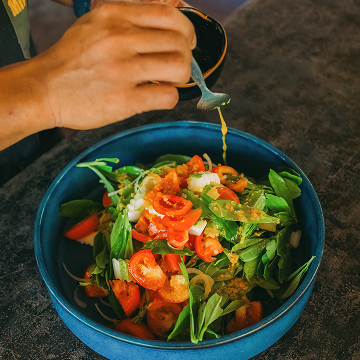
Women's Association
Lorem ipsum dolor sit amet, consectetur adipiscing elit, sed do eiusmod tempor incididunt ut labore et dolore magna aliqua
+ Read more
The Foundation
Lorem ipsum dolor sit amet, consectetur adipiscing elit, sed do eiusmod tempor incididunt ut labore et dolore magna aliqua
+ Read more
Tao at 20
Lorem ipsum dolor sit amet, consectetur adipiscing elit, sed do eiusmod tempor incididunt ut labore et dolore magna aliqua
+ Read moreOur Food
Lorem ipsum dolor sit amet, consectetur adipiscing elit, sed do eiusmod tempor incididunt ut labore et dolore magna aliqua
+ Read moreThe Lost Boys
Lorem ipsum dolor sit amet, consectetur adipiscing elit, sed do eiusmod tempor incididunt ut labore et dolore magna aliqua
+ Read moreThe Foundation
Lorem ipsum dolor sit amet, consectetur adipiscing elit, sed do eiusmod tempor incididunt ut labore et dolore magna aliqua
+ Read moreBamboo Architecture
Lorem ipsum dolor sit amet, consectetur adipiscing elit, sed do eiusmod tempor incididunt ut labore et dolore magna aliqua
+ Read moreWomen's Association
Lorem ipsum dolor sit amet, consectetur adipiscing elit, sed do eiusmod tempor incididunt ut labore et dolore magna aliqua
+ Read moreTao at 20
Lorem ipsum dolor sit amet, consectetur adipiscing elit, sed do eiusmod tempor incididunt ut labore et dolore magna aliqua
+ Read moreOur Food
Lorem ipsum dolor sit amet, consectetur adipiscing elit, sed do eiusmod tempor incididunt ut labore et dolore magna aliqua
+ Read moreWomen's Association
Lorem ipsum dolor sit amet, consectetur adipiscing elit, sed do eiusmod tempor incididunt ut labore et dolore magna aliqua
+ Read moreTao is The original Palawan expedition since 2006

20 Years Experience
Get you off the beaten track El Nido, Linapacan and Coron

Safety & Comfort
Rigorous training and adapted boats make us second to none

Food and Drink
Our meals are served with our special brand of hospitality

Education & Livelihood
Each contributes directly and indirectly to the community

Exclusive Properties
Pristine locations, limited access and bespoke design
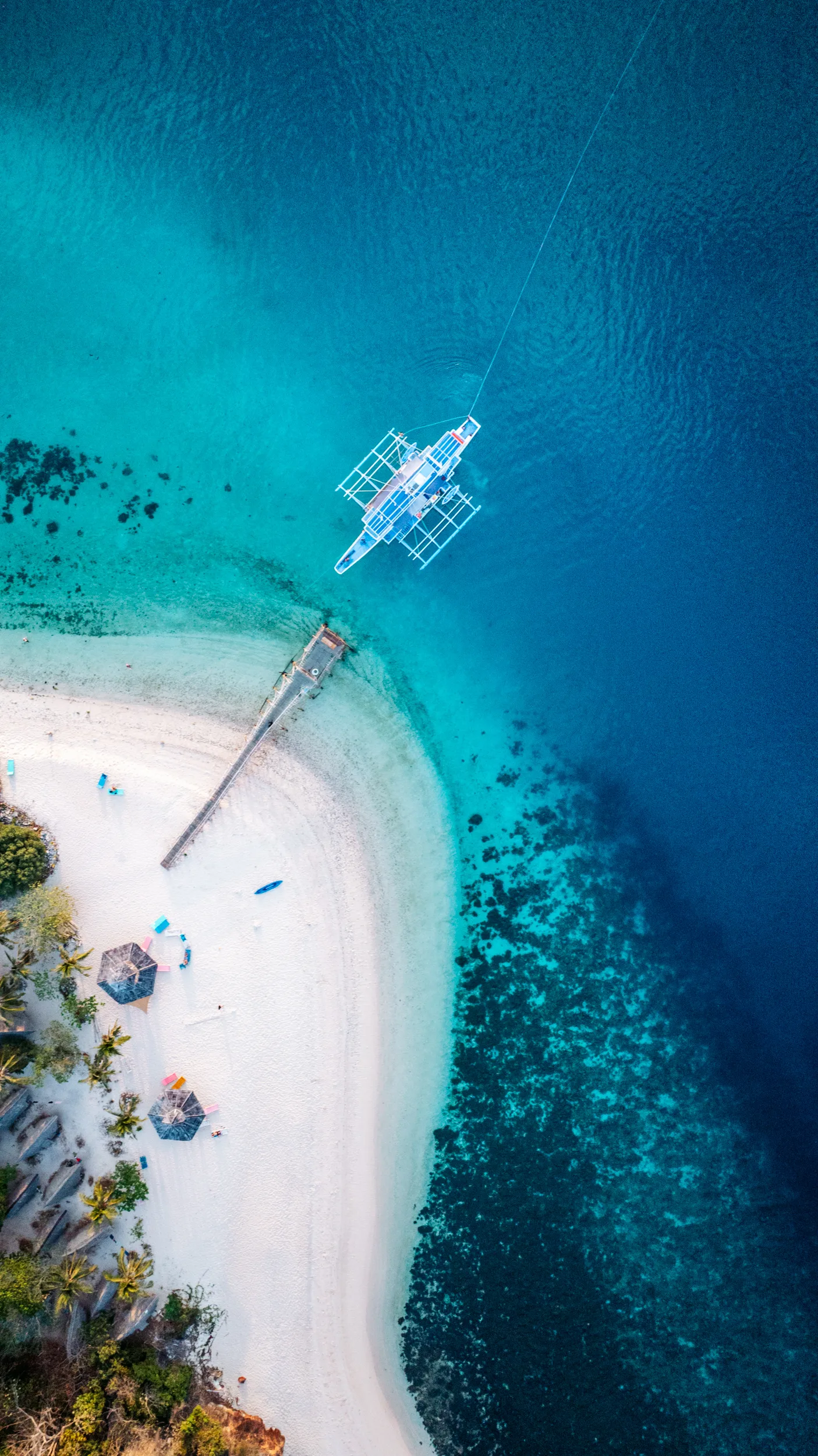
Private
adventure in
paradise
Whether you are friends, family or want to plan a special occasion, for groups numbering over six we can put together bespoke trips that will linger long in your collective memory bank.